News
International Congress on Arabidopsis Research (ICAR 2025)
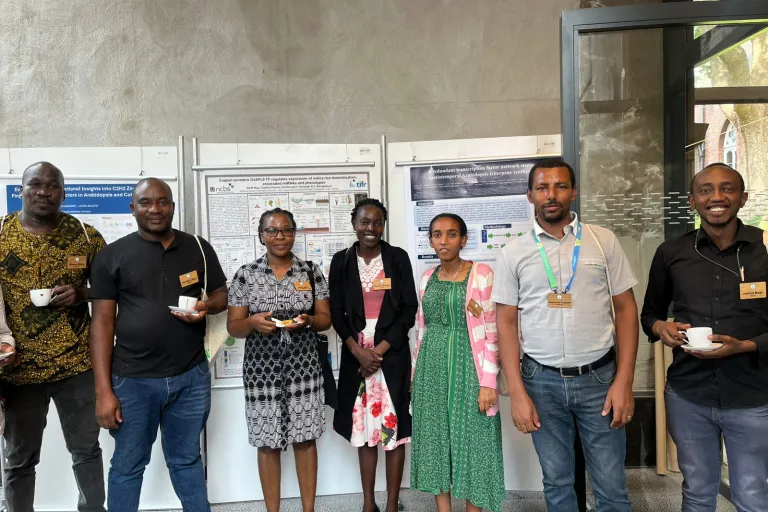
On the sidelines of the Summer School on Plant Genome Editing, the MoBioLab project co-funded the full registration of 9 Plant Biotechnology & Breeding (Plant B&B) fellows to attend the International Congress on Arabidopsis Research (ICAR 2025), held from 16 to 20 June in Bilojke, Ghent. These nine fellows represented 7 partner institutions from the Plant B&B network, reflecting the network’s commitment to fostering diverse and inclusive scientific exchange. ICAR 2025 provided a platform for the scholars to engage with leading scientists and thought leaders in plant biotechnology, genomics and molecular biology. Through keynote lectures, symposia and poster sessions, the fellows not only expanded their knowledge of frontier research but also established meaningful connections with global peers. Importantly, the congress offered them the opportunity to present their own research to an international audience, receiving critical feedback from seasoned experts, jury panels and peers. This experience significantly enriched their scientific communication skills and deepened their integration into the global plant science community, reinforcing the long-term impact of the Plant B&B network’s training and mobility initiatives.

Online Café: Agrobacterium-mediated transformation of cereals for Striga resistance
This Online Café featured presentations from Prof. Laurens Pauwels and Prof. Steven Runo, both renowned experts in plant biotechnology and molecular biology under the theme: Agrobacterium-mediated transformation of cereals for Striga resistance.
Prof. Laurens Pauwels leads the Laboratory for Plant Transformation & Gene Editing at Ghent University (UGent), Department of Biotechnology (www.pauwelslab.be). His research focuses on CRISPR/Cas9 gene editing and Agrobacterium engineering, with the goal of enhancing transformation methods for crops such as maize and wheat. His work contributes to improving genetic modification techniques that can boost crop resilience and productivity. Prof. Steven Runo, a leading plant biotechnologist from Kenyatta University, specializes in molecular approaches to combating parasitic weeds. His research is dedicated to developing Striga-resistant sorghum through molecular genetics and breeding technologies. By enhancing cereals' resistance to this devastating parasitic plant, his work plays a crucial role in improving food security across Africa.
Together, they shared insights on Agrobacterium-mediated transformation of cereals improvement, bridging the gap between cutting-edge scientific research and practical agricultural applications. Their insights provide valuable perspectives on how advanced biotechnological tools can be leveraged to address major agricultural challenges.

Online Café: Genomic and Transcriptomic Insights into Drought Responses to Enhance Crop Productivity
Prolonged periods of inadequate water supply -drought- severely affect plant growth and development. Plants have evolved temporal and spatial response mechanisms to drought. In additional to structural and morphological adaptations, the plant response to drought are driven by complex molecular and biochemical pathways.
This critical topic was explored in an insightful Online café session in the framework of the EU-Horizon BOOSTER project by Dr. Hilde Nelissen, Adjunct Director at VIB-Center for Plant Systems Biology and Professor at Ghent University and Dr. Damaris Odeny, Principal Scientist at ICRISAT. They highlighted their work on advanced genomic methods and tools aimed at enhancing crop resilience to drought and overcoming growth and development constraints, offering innovative solutions for improving agricultural sustainability in water-scarce agricultural system occasioned by climate change.

Crop Science Association of Tanzania Annual Scientific Conference
Plant B&B facilitated the participation of Dr. Marc Heijde, VIB-IPBO Program Manager and Ms. Anne Muia, Scientific Officer at the National Biosafety Authority-Kenya, to the Crop Science Association of Tanzania (CROSAT) Annual Scientific Conference in November 2024 in Dodoma, Tanzania.
During the conference, the scientists highlighted the potential benefits of integrating plant biotechnology into conventional agriculture and emphasized the need to amend the National Biosafety Framework to enable experimentation and commercialization of gene-edited crops as a sustainable solution to climate challenges. Their sentiments were ably echoed by Vice Chancellor of Sokoine University of Agriculture Prof. Raphael Chibunda. Prof Chibuda emphasized the need to ease the strict laws and regulations which limit the adoption of Biotechnology in Tanzania. This visit was made at the invitation of Plant B&B partner Dr. Yasinta Nzogela, a lecturer at Sokoine University of Agriculture and a Open Door Program Fellow at VIB-IPBO.

International Association of Students in Agricultural and Related Sciences (IAAS) visit to VIB Centre for Plant System Biology
As part of the Plant B&B project, VIB-IPBO hosted 14 students from the International Association of Students in Agricultural and Related Sciences (IAAS), representing Asia, Europe and Africa for a Science Exchange day on 10 October 2024 at VIB-Centre for Plant Systems Biology (VIB-PSB). The program featured a presentation by Dr. Hilde Nelissen, Adjunct Director at VIB-PSB and Professor at Ghent University, highlighting research at the Plant Systems Biology Centre. Dr. Marc Heijde, Project Manager at VIB-IPBO and Professor at Ghent University, discussed knowledge and technology transfer with African institutions. After the visit, the students toured labs, the Phenovision phenotyping platform, and the greenhouses.

Online Cafe: Biostimulants for sustainable agriculture in Europe and Africa
Did you know that some soil bacteria are able to enter in symbiosis with crops and legumes and promote nitrogen fixation?
In this Online Cafè we dived into the use of Rhizobia -a nitrogen fixating bacteria- as biostimulant, to improve plant growth, nutrition and abiotic stress tolerance in crops. Watch the seminar to know more about the use of Rhizobia as biostimulant in East Africa and Europe. This Online cafe was the first of a series of cafes dedicated to the EU - Horizon BOOSTER Project.

VIB Centre for Plant System Biology Seminar Series
On May 23, 2024, the Plant Biotechnology and Breeding (Plant B&B) co-sponsored a PSB seminar featuring Prof. Baldwin Torto from the International Centre of Insect Physiology and Ecology (icipe), Nairobi, Kenya.
Prof. Torto presented on "Building Eco-Responsive Strategies to Manage Plant Parasitic Nematodes." The seminar highlighted the role of semiochemicals in mediating chemical communication among species, focusing on below-ground pests like plant parasitic nematodes. Prof. Torto shared advances in identifying semiochemicals that influence nematode behavior, showcasing strategies such as companion cropping to suppress root-knot nematodes in tomatoes and biodegradable matrices to disrupt host-finding signals, offering sustainable solutions for smallholder agriculture.
Plant B+B annual meeting
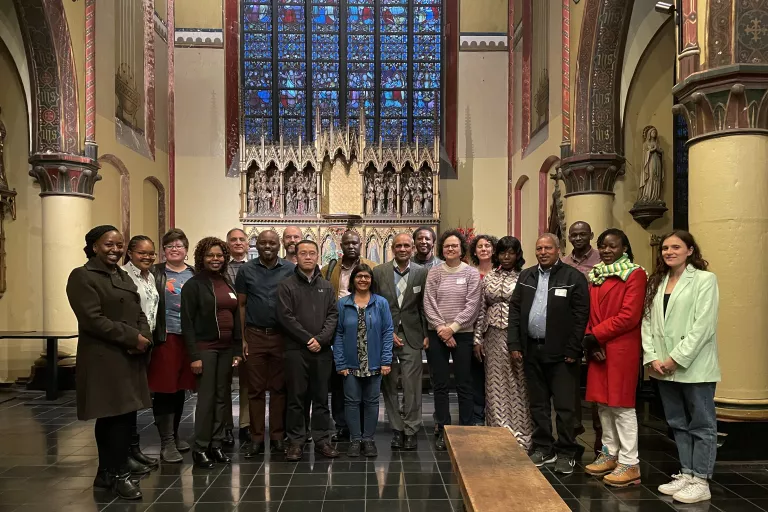
This year's annual meeting for Plant B+B partners was exceptional. Partners had the unique opportunity to gather in person in November 2023, marking the first such occasion since the network's inception. The meeting served as a platform to showcase the network's diverse achievements and projects, including the Open Doors Fellowship Program, the Summer School in Plant Breeding, and the MOBIlab. Additionally, it provided an invaluable opportunity for collaborative brainstorming on the way forward.

Crash course in molecular biology
In March 2023, at Moi University in Kenya, IPBO conducted a pilot training program called the Crash Course in Molecular Biology (CCMB). This program provided practical training in basic molecular biology and basic bioinformatics to Moi University staff and students. The Kringloop initiative complemented this training program by improving the lab infrastructure at the training facility. We aim to equip African partners with the skills and resources to create global partnerships. We thank our collaborators, including Provincie Oost-Vlaanderen, Marc & Nora Van Montagu Fund, and Moi University. Additionally, we would like to thank Marianna Decet, a PhD student at VIB-KU Leuven, and Ivy Cuijt, a research technician at VIB-Antwerp, for volunteering to join our team and deliver the training.
International day for women and girls in science, 2023
On February 11th, we joined the world to celebrate women and girls in science. The aim in 2023 was to connect women and girls in science to the international community, thus strengthening the ties in science, policy and society for future-oriented strategies.
The international plant biotechnology outreach contributes to supporting women in science through some of its initiatives, such as the Open doors fellowship program. This fellowship program targets mid-career female scientists.
Plant B+B annual meeting
Partners of plant B+B held their end-of-year meeting in December 2022. Within the past year, this project has achieved its three main objectives: sponsoring several training programs ( Open doors fellowship, speaking science and the crash course of molecular biology), a symposium and co-sponsoring other projects that are key to sub-Saharan Africa. Plant B+B provided grants to early career researchers, helping them acquire new skills and increase their visibility in their respective disciplines. Watch the plant B+B annual meeting here.
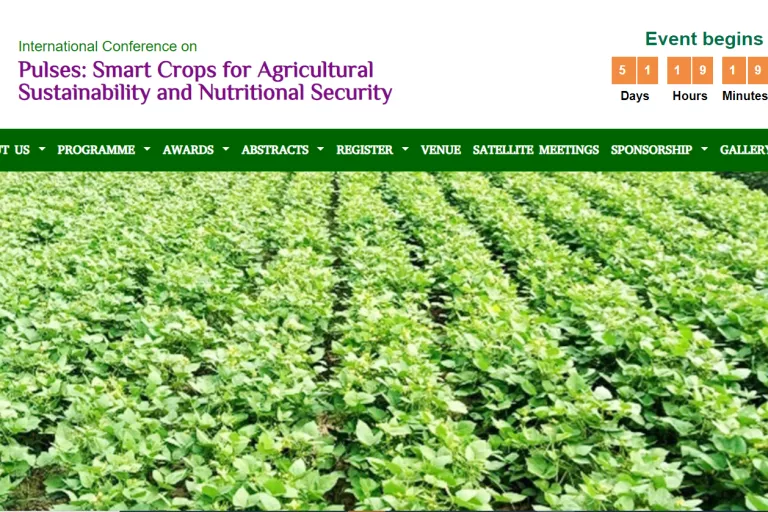
International Conference on Pulses: Smart Crops for Agricultural Sustainability and Nutritional Security
This conference will be held from February 10 -12, 2023, at National Agricultural Science Complex (NASC), Dev Prakash Shastri Marg, PUSA Campus, New Delhi, India, 110012. The conference is open to international partners.
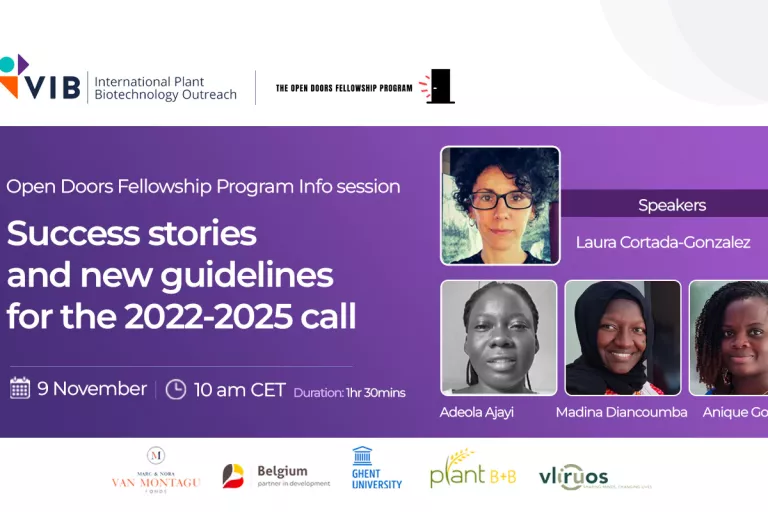
Open Door Fellowship Program: Webinar
The open doors fellowship program ( ODFP ) targets African female researchers to help them acquire soft and hard skills to strengthen their placements within the hosting situation. The first cohort ( Adeola Ajayi, Madina Diancoumba and Anique Godjo ) shared their short research stay experience in Belgium during the webinar. Laura Cortada, the project coordinator, explained the new guidelines for the call. The ODFP program received a grant from VLIR-UOS for 2022 – 2025. Through this grant, sixteen female researchers will be sponsored, with each cohort having eight participants.
The call is officially open today: 10th of November 2022 till 10th of January, 2023
Open Doors Fellowship Program
The open doors fellowship program received a scholarship grant from VLIR_UOS and it is also supported by the plant B+B project, Marc & Nora Van Montagu fund and ENABEL. The fellowship will support eight women in post-doc positions through this grant for 20 months. The 2023-2025 call was announced on 10/Nov/2022. The application deadline for the ODFP will be on 10/Jan/2023.

Speaking science: 2nd edition
Speaking science 2nd edition was a five-week course that aimed to strengthen the communication skills of early and mid-career agro-biotechnology and plant breeding scientists. Often, new technologies do not get the attention they deserve due to little or no communication from scientists. During the 5-week course, the participants gained a lot of soft skills from the trainers. One group from this year’s cohort has planned a webinar to inform the masses about nematode the “unseen enemy”.
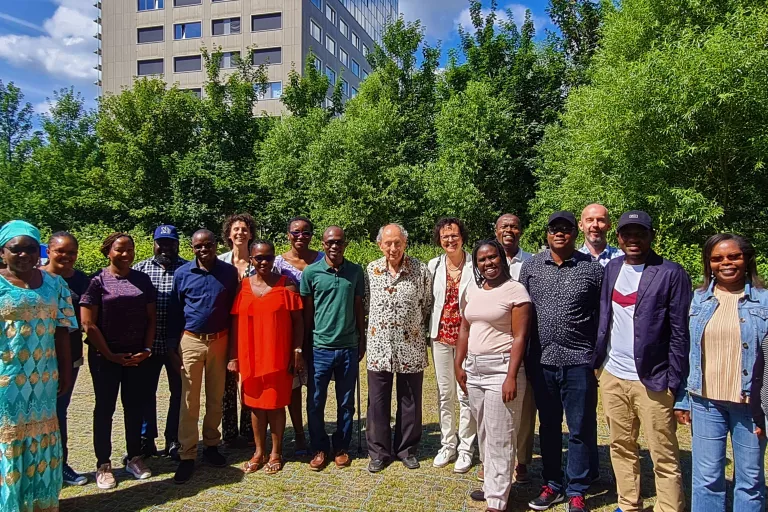
Modern breeding techniques for maize improvement
Twelve African scientists attended this course for one month. The study focused on: The latest scientific developments and tools to accelerate maize breeding (both conventional breeding and biotechnological techniques); The latest essential insights in the regulatory framework and environmental risk assessment principles in Africa and Europe, and methods to collect reliable data that allow a thorough environmental risk assessment of new maize varieties. The participants also attended three workshops where they developed skills in public presentations, scientific communication and how to write competitive EU proposals.
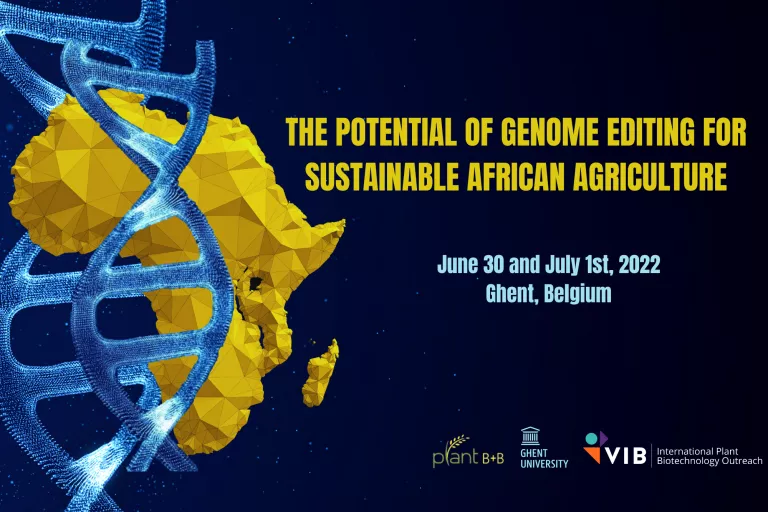
The potential of genome editing for sustainable African agriculture
On June 30 and July 1, VIB-IPBO organized a symposium on genome editing and the potential of this technology to be transformative toward more resilient and sustainable agriculture in Africa. During this event, we elaborated on the ongoing research on crops that are relevant to the continent. We looked at the regulatory frameworks and their capacity to enable technology adoption. The socio-economic potential of this technology was addressed to better understand if Africa is eager to adopt this technology and if there is any benefit for the continent in doing so.

The Plant Breeding Center of the University of Minnesota is a new Plant B+B member
The Plant Biotechnology & Breeding (Plant B+B) International Thematic Network (ITN) is delighted to welcome its new partner, the Plant Breeding Center of the University of Minnesota (UMN) in the USA. Prof Dr Rex Bernardo, Endowed Chair in Corn Breeding and Genetics and Director of the Plant Breeding Center, represents this institution in the Plant B+B Network.
The Plant Breeding Centre is hosted by the College of Food, Agriculture and Natural Resources Sciences (CFANS). Its main objective is to serve as a hub for leveraging Minnesota strengths plant breeding research, varietal development, and graduate education. Through its collaboration with the Plant B+B ITN, the expertise and state of the art facilities of the Plant Breeding Centre of UMN will be made available to the researchers of our network for the advancement of education and the dissemination of applied research on advanced plant biotechnology; breeding techniques.
As part of this partnership, the Plant Breeding Centre of UMN and the Plant B+B network are organizing a program to train scientists at UMN through short research stays co-sponsored by both institutions. The training program will support scientists for a one-month to conduct a research visit at the University of Minnesota to learn more about plant breeding, biotechnology, and allied disciplines. The awardees will have the chance to attend two courses at the 2022 Summer Institute in Plant Breeding, and they will spend three weeks researching while hosted in the laboratories of professors at the Saint Paul Campus. We shall soon release more details of this fantastic opportunity.
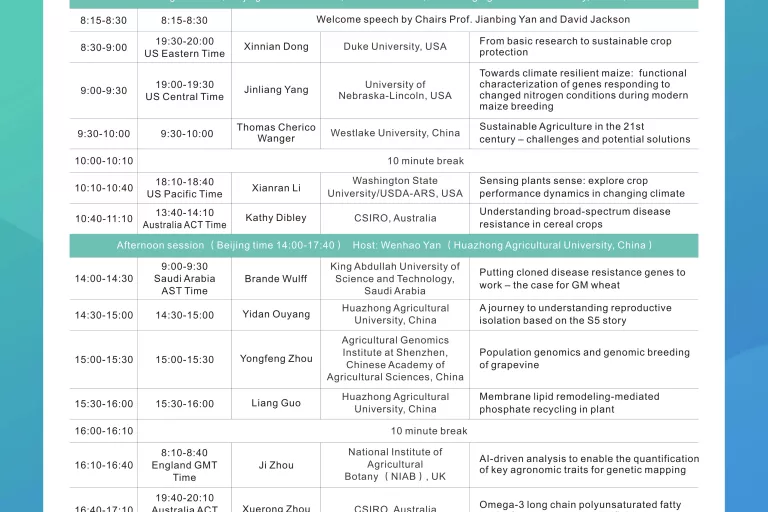
The 2nd International Forum on Crop Science (Online)
November 16, 2021, Wuhan China
This forum invited world-renowned crop and plant science experts to discuss the progress of crop functional genomics, crop genetic improvement and solutions for sustainable agriculture. Professor Yan Jianbing from Huazhong Agricultural University in China and Professor David Jackson from Cold Spring Laboratory in the United States chaired the forum. This forum was jointly organized by the National Key Laboratory of Crop Genetic Improvement at Huazhong Agricultural University and the Plant Biotechnology and Breeding network coordinated by VIB at Ghent University in Belgium.
Plant breeding 2 fight hunger
Plant breeding is the art and science of crop improvement. To feed an additional 3 billion people by 2050, food production needs to double while using less land, water, and other resources.

Speaking Science: Edition 1
Training for biotechnology scientists to communicate effectively and proactively about their research.
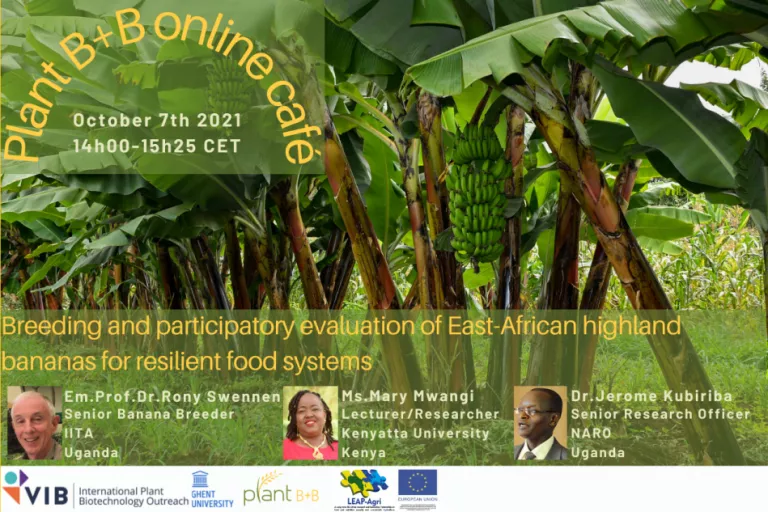
3rd Online café Plant B+B
In our third Plant Biotechnology and Breeding (Plant B+B) online café we have invited speakers Em. Prof. Dr Rony Swennen (IITA), Dr Jerome Kubiriba (National Agricultural Research Organization- NARO, Uganda) and Mary Mwangi (Kenyatta University, KU, Kenya)
Our invited scientists presented their findings on how the breeding work conducted by their teams has been instrumental in creating high-yielding cooking bananas and how these new varieties are finding their way to East African markets. Indeed, the speakers went further than the breeding work and will share their experiences on the key characteristics that lead to a better adoption by farmers of the newly bred banana lines and the acceptance by the local consumers. The researchers further discussed cross-cutting aspects such as how gender-responsive breeding and improved agronomical practices have a role to play in adopting and disseminating the new banana varieties to improve EA farmers’ livelihoods.
Online café Plant B+B
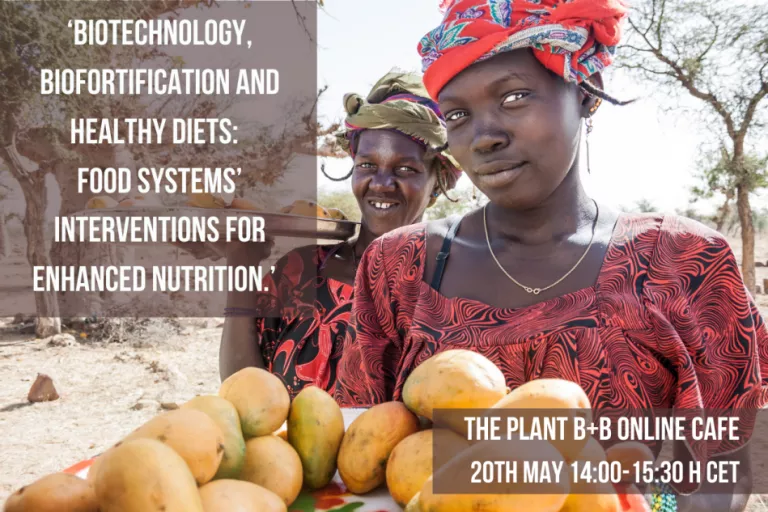
Biotechnology, biofortification and healthy diets: food systems' interventions for enhanced nutrition.
In this new Plant B+B Online Cafe, we featured the scientific views of Prof Dr Dominique Van Der Straeten, Prof Dr Hans De Steur, and Prof Dr Carl Lachat (UGent). Our invited researchers presented their findings on how biotechnology is essential for crop biofortification and the socio-economic determinants for adopting biofortified varieties. Furthermore, we discussed how scientists could promote biofortified crops and what strategies could be used by scientists and practitioners to integrate biofortification into broader food system interventions for healthy diets.

Green Enlightenment webinar by Marc Van Montagu
In this inaugural webinar, Marc Van Montagu talked about Science as a fundamental tool to understand life in general and human societies in particular. Observations on cause and effect and mathematical reasoning have helped us understand the nonliving world so well that we have called it Enlightenment. Until recently, the application of these "laws of nature" to explain the behavior of animals has brought nothing but confusion and anarchy. Understanding molecular and cellular biology, genetics, evolution, and ecology gives hope that we can wake up from this nightmare. How important are these reflections for the Plant B+B network?